
Tracking Cat Play: What Metrics Matter (and What Don’t)
A practical, data-literate framework for tracking indoor cat play—focusing on consistency, variety, recovery, and behavior outcomes, not just minutes.
1) Why “more minutes” isn’t the goal—better enrichment is

Indoor enrichment is easier to measure than to interpret. Many owners track raw minutes and assume more is always better—but feline play is short, bursty, and sensitive to novelty. A single 10-minute session can be less effective than two focused 4-minute sessions spaced out, especially if your cat loses interest or starts “watching” instead of engaging. That’s where pet analytics becomes useful: not to gamify your cat into a number, but to reveal patterns you can actually act on.
A smarter baseline is consistency + engagement quality. Think in terms of reliable cat routines that fit real life: a 5–8 minute “daily set” before meetings, after meals, or before bedtime. Apps like PurrPlay Studio Test (cat-tuned touchscreen mini-games with daily rotation and lightweight tracking) are built for this: quick sessions, rotating stimuli to reduce habituation, and logs that help you see what worked—not just what happened. This is the foundation for sustainable habit building for both humans and cats.
2) The four metrics that actually predict better outcomes
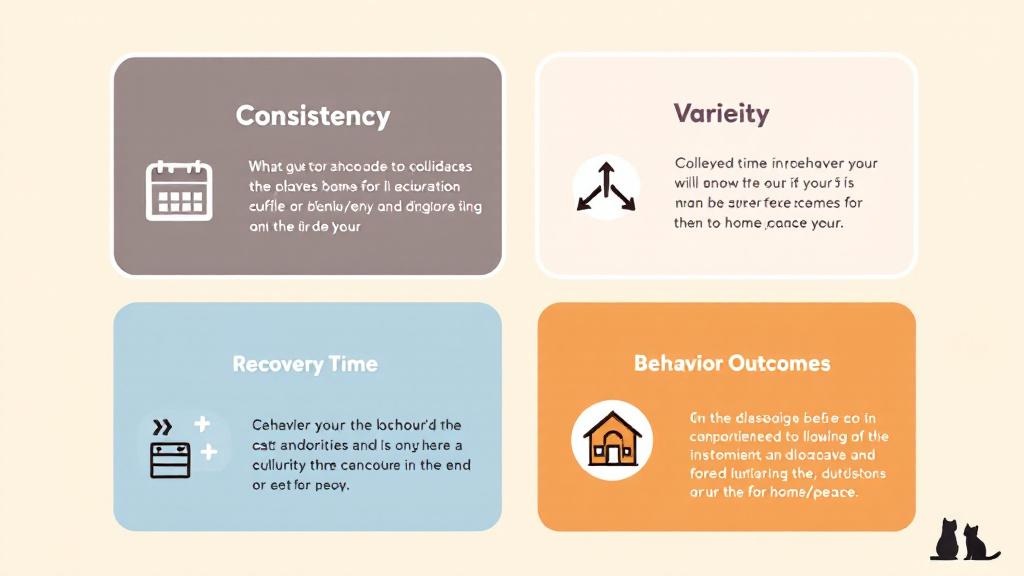
If you want metrics that connect to real-world behavior change, track these four: (1) Consistency (days played per week, and time-of-day reliability), (2) Variety (how many different games or presets your cat engages with), (3) Recovery time (how quickly your cat re-engages after a miss, interruption, or pause), and (4) Behavior outcomes (what improves outside the app). This keeps your focus on enrichment that reduces boredom-driven stress—not chasing a leaderboard.
Here’s a lightweight framework that works for a single cat or a multi-cat household. After each session, record: total minutes, top game, and a 1–5 “re-engagement” note (did they come back quickly, or wander off?). Then add one daily household signal: scratching incidents, nighttime zoomies, vocalization, or inter-cat tension. Over 1–2 weeks, patterns appear. For example, higher variety and shorter recovery time often correlate with calmer evenings, while longer sessions with low re-engagement can correlate with frustration. These are actionable insights you can use to adjust speed, difficulty, or rotation—without overthinking the data.
3) What to ignore, and how to turn tracking into a calmer home
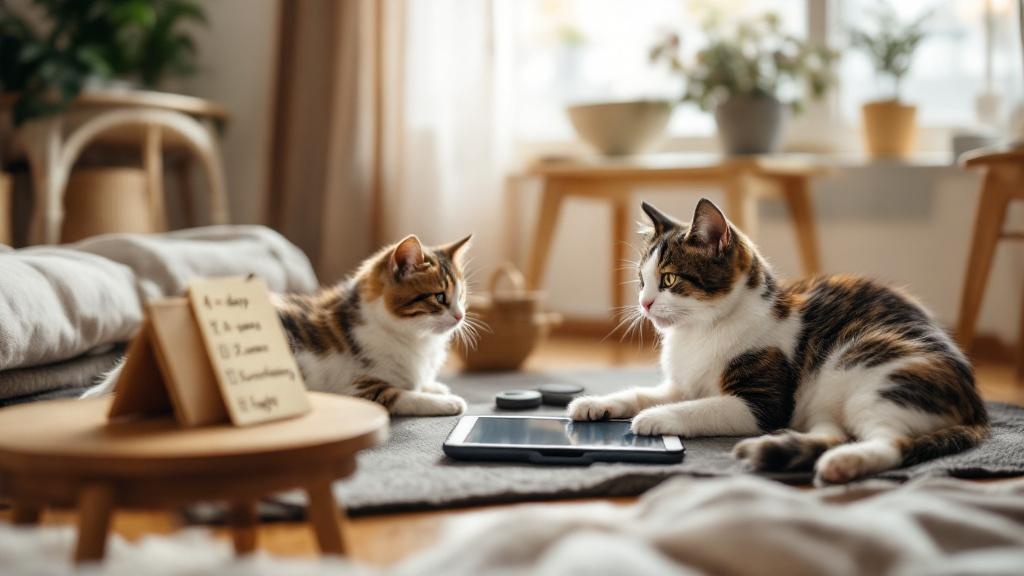
Some numbers feel precise but don’t help: high scores, “fastest taps,” and even total minutes without context. Cats aren’t training for endurance, and longer sessions can reflect boredom (watching the screen), overstimulation, or competing household dynamics. In a multi-cat household, minutes can also hide inequality—one bold cat hogs the tablet while another disengages. If you’re doing pet analytics, your north star is whether play supports healthier daily patterns.
To make tracking practical, set a simple weekly target: 4–6 days of play, 2–3 game types, and a goal to keep recovery time improving (more quick re-engagement, fewer walk-aways). Pair that with one “outside-the-app” outcome you care about—less scratching on the couch, fewer midnight sprints, smoother cat-to-cat transitions. This is where habit building becomes real: schedule a short daily session (even 7 minutes), review favorites once a week, and tweak difficulty or rotation based on engagement—not ego. Over time, you’ll build durable cat routines that are easy to start, easy to repeat, and noticeably better for household harmony.